The Age of AI and the Enduring Role of the Film Producer | The Hong Kong Fixer
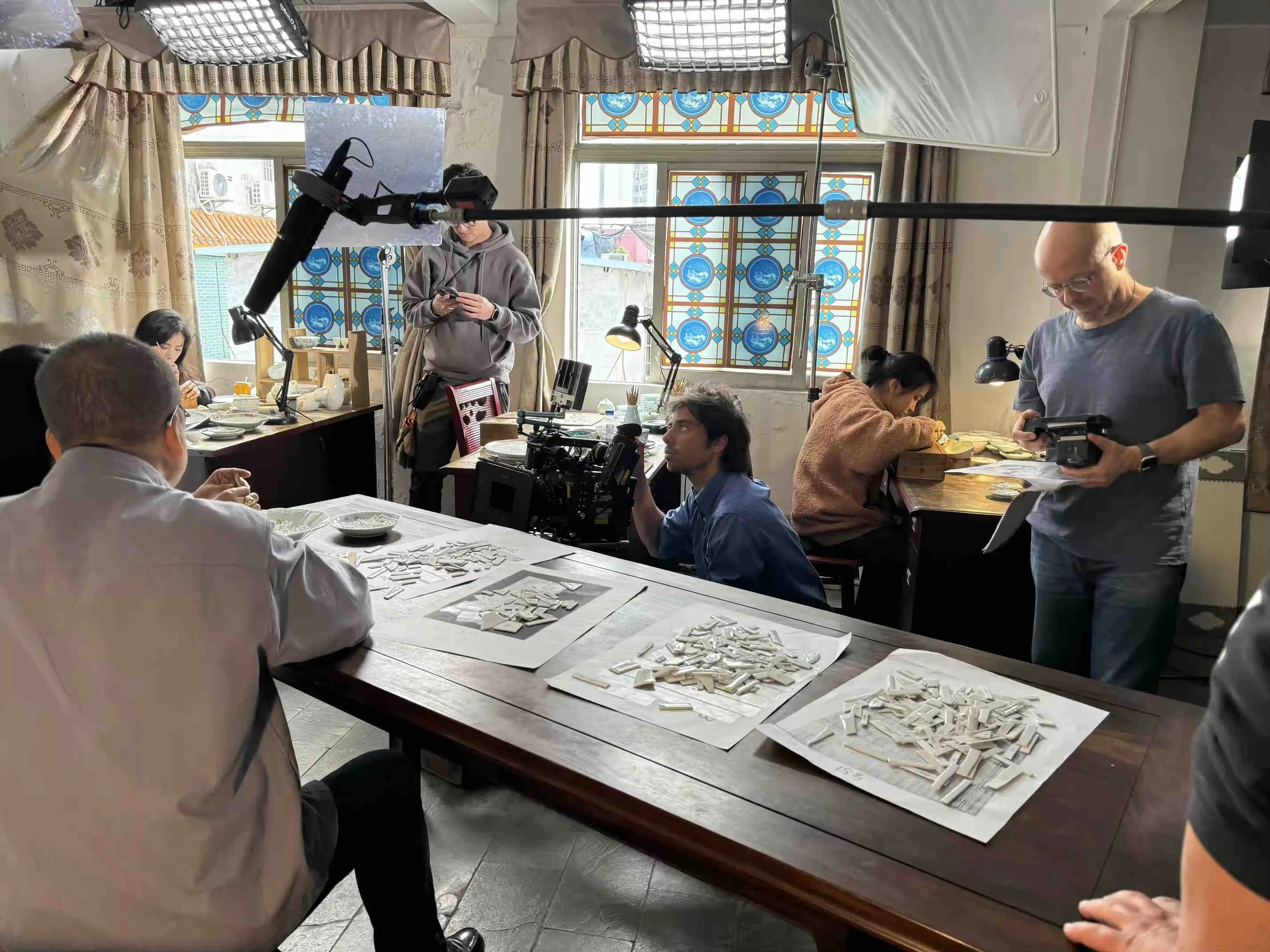
AI can not replace this…
The State of AI in Film and Video Production
2025 has drawn to a close, and it has been—by any reasonable measure—a busy year for The Hong Kong Fixer. So busy, in fact, that we have spent more time producing than speaking about what we produce. It is a familiar paradox of the content maker: deeply immersed in film production and location services, with little time left to narrate the journey.
With the new year, we want to reset. To speak a little more often. To share not only our progress and successes, but also our hesitations, our missteps, and what they have taught us along the way. If filmmaking is ultimately about storytelling, then transparency about the process—and the thinking behind it—matters too.
There is little debate that 2025 marked a turning point for the film and video production industry. One term dominated nearly every conversation: artificial intelligence. Kilometres of text—human-written and machine-generated alike—have already been produced on the subject, and far more will follow. We will spare you the platitudes. Instead, we want to focus on two practical questions that now face every creative producer, fixer, and production partner.
First: what is the role of a professional film producer, video production company, or fixer in an age saturated with AI-generated content?
Second: how do we, as practitioners, use these new tools intelligently and responsibly?
AI is not a passing trend. It is a structural shift. From Hollywood studios—where it played a central role in the 2023 Writers Guild and SAG-AFTRA strikes—to boutique production companies like ours, the technology is reshaping workflows at every level of production. With the rapid rise of tools such as OpenAI’s Sora, Google’s Veo, Runway, Kling, and others, we have crossed a threshold. In many cases, it has become genuinely difficult to distinguish AI-generated imagery from filmed reality.
This raises uncomfortable questions. If images can no longer be taken at face value, what happens to truth? What does authenticity mean in a post-verification world?
History offers useful perspective. Every major technological leap—the printing press, photography, recorded sound, the internet—triggered an explosion of content across a wide range of quality. Creation became more accessible, but discernment became more valuable. Millions could write after Gutenberg; only a few became Hemingway. Millions publish today; only a handful shape culture in lasting ways.
AI accelerates this phenomenon at unprecedented speed.
At the top end, major brands have already begun experimenting publicly. Coca-Cola’s AI-assisted holiday and Super Bowl campaigns sparked both fascination and backlash—praised for technical ambition, questioned for emotional depth. At the other end of the spectrum lies a vast ocean of algorithmic video: CEO avatars delivering LinkedIn posts, endless TikTok and Instagram loops engineered for dopamine rather than meaning, surreal prompt-driven experiments that circulate briefly because they can exist, not because they say anything.
This is not what we do. And it is not what our clients come to us for.
Why a Professional Producer and Fixer Still Matter
At the opposite pole of AI spectacle lies something more fragile, and more enduring: authenticity, performance, human presence, and the physical world. The way light behaves in a real location. The tension in a room before the camera rolls. The chemistry between people sharing the same space. These are not inefficiencies to be optimized away; they are the substance of cinema and high-quality video production.
We believe audiences—and brands—will become more discerning, not less. Different tools will serve different purposes. There will be room for fast, synthetic content and room for carefully crafted films rooted in reality. The key is alignment: communication goals, audience expectations, brand positioning. Not every story deserves the same technique.
We are not technophobic. Quite the opposite. We experiment constantly. AI is powerful, exciting, and undeniably useful. But the essential question remains: for what, and for whom? Every story deserves its own grammar.
The pandemic years pushed much of life into flattened, remote forms—Zoom replacing rooms, screens replacing presence. What we are now witnessing is a counter-movement. Relationships feel stronger in person. Deals still close best with a handshake. Teams function better when they share space. Film production is no different. After the novelty fades, after fatigue with synthetic sameness sets in, we believe audiences will increasingly gravitate toward work that feels intentional, embodied, and human.
This is where the enduring value of a professional producer, fixer, and production partner becomes clear.
Authenticity, Intention, and the Limits of AI
AI does not care about your project. It does not understand context, culture, or consequence. It does not lose sleep over creative decisions or logistical risks. What it lacks—intention, taste, on set judgment and decision making, aesthetic sensibility—is precisely what experienced producers and fixers bring to the table. From location services in Hong Kong and across Asia, to crew management, film production, video production, and post-production oversight, our role is to make projects work—not just technically, but meaningfully.

…but we can have a lot fun with AI!
Our AI Philosophy at The Hong Kong Fixer
At The Hong Kong Fixer, we have adopted a multi-touchpoint AI philosophy. We use AI to amplify our expertise, support decision-making, streamline workflows, and free up time for what matters most: story, clients, quality, and service. The goal is not replacement, but leverage. And to have a bit of fun too!
In practical terms:
Business development: AI-assisted note-taking, research, and lead generation are now essential tools.
Communication and marketing: We use platforms like ChatGPT to support outreach, sharpen messaging, and enrich content—always with human oversight.
Strategy and ideation: Human-led research and creative “compost heaps,” challenged and expanded through tools such as ChatGPT, Perplexity Pro, Gemini, and DeepSeek.
Visualization: A hybrid approach combining AI-assisted concepting with human artists, directors, and designers, using tools like Midjourney and Sora for early-stage thinking.
Budgeting and planning: Smarter forecasting and project management, informed—but never dictated—by automation, notably through Notion.
Production and post-production: Ongoing experimentation with AI-enhanced tools in Adobe and DaVinci Resolve, addressing long-standing challenges from sound cleanup and image upscaling to background replacement and creative iteration.
The list goes on. What matters is not the tool itself, but how—and why—it is used.
We believe in the right tool for the right job, applied consciously. Mastery begins not with the prompt, but with judgment.
2025 reminded us that technology will continue to accelerate. The more urgent task is deciding what deserves to endure. For our part, we continue to place our faith in craft, collaboration, and stories made with intention—trusting that, on screen, the difference can still be felt.
Let’s Talk
If you are planning a film, documentary, commercial, or video production in Hong Kong or across Asia, and are looking for an experienced fixer, producer, or full-service production partner, we would be glad to talk.
You can explore our work or get in touch with The Hong Kong Fixer via https://www.thehongkongfixer.com